|
|
|
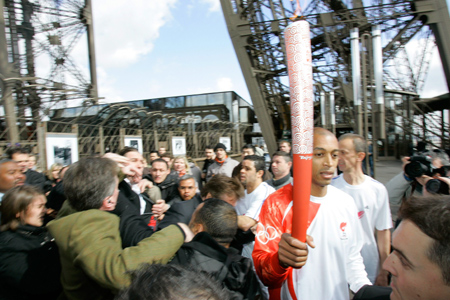
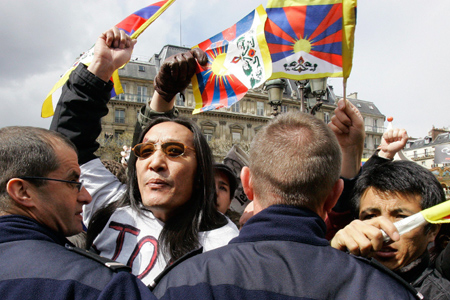
As protests continue to disrupt the Olympic torch's journey towards Beijing, Canada's Defence Minister Peter MacKay said the Conservative government has not yet decided on a potential boycott of the Beijing Olympics. Speaking to reporters on Monday, MacKay said the issue is likely to be discussed at the cabinet table and no decision will be made until that happens. "Without having the discussion we can't rule anything out, so were not at that point," he said. Prime Minister Stephen Harper has said he has no plans to attend the opening ceremonies of the Summer Games but he has stressed his decision is a personal one. On Monday, activists clashed with police in Paris where the torch relay made a scheduled appearance. One day earlier demonstrators in London disrupted the torch relay when it made a stop in that city. Much of the torch's 137,000-kilometre journey to Beijing could be hindered by the demonstrations, most in protest of China's human rights record and a recent crackdown on Tibetans. The Canadian Olympic Committee issued a statement on Monday, saying its focus is on "the preparation and performance of our athletes." "We recognize that the global reach of the Olympic Games often illuminates non-sports-related issues that spark deeply felt passions," said the statement from President Michael Chambers and Chief Executive Officer Chris Rudge. "However, it is not the role or jurisdiction of the COC, as a National Olympic Committee, to engage itself in issues that concern sovereign matters." The COC statement goes on to say that the organization respects freedom of expression and believes that the presence of the Olympic Games in a country is a force for positive change. CTV's Senior Olympic Host Brian Williams, who has covered 12 Olympic games, said the recent protests come as no surprise. "At the time we all said this is a recipe for mass demonstrations, given the human rights record of that country," Williams told CTV's Mike Duffy Live on Monday. "The International Olympic Committee though maintained that by giving China the summer Olympics in this year, 2008, they would advance the cause of human rights in that country." Toronto had also bid for the 2008 Games but lost out to Beijing. Williams pointed out that while the protests are disruptive, they are bringing attention to an issue that wouldn't be in the spotlight if Toronto had won the contest. Williams said he is against Olympic boycotts, and said the athletes shouldn't be made to suffer for the actions of a sovereign country. "My feeling is this," Williams said. "Young men and women, whether in our country or around the world, that sacrifice so much for their one moment in the sun, they should not have the problems in China put on their shoulders only." Some international leaders have added their voices to those speaking out against China's human rights record. Several high-ranking German officials have said they will not attend the opening ceremonies and IOC boss Jacques Rogge has called for a peaceful resolution to the conflict with Tibet. French President Nicholas Sarkozy said last week he wouldn't rule out the possibility of boycotting the opening ceremonies. MacKay said it's clear the world is making a statement about China's human rights record. "It's undeniable," he said. "It's impossible to not see the reaction that's occurring around the Olympics. It has become a forum for expression for people and their concern for what is happening in China." David Kilgour, an international human rights lawyer and former MP who once served as co-chair of the Parliamentary Friends of Tibet, said the IOC made a "terrible" mistake by awarding the Games to China, based on the country's human rights record. However, he agreed with Williams that a full boycott of the Olympics would primarily punish the athletes, and said a boycott of the opening ceremonies would be a more reasonable option. "I think a partial boycott -- if people of principal, governments of principal, would say 'we won't go for the opening exercise but we won't deny our athletes the chance to compete,' that might be good."
|
|